
[NDN/ccn/comedia Links]
We repeated it ad nauseam: that of Joan Mir, last Sunday in Valencia, was the seventh world title that Suzuki won with six different drivers: Barry Sheene, Marco Lucchinelli, Franco Uncini, Kevin Schwantz, Kenny Roberts Jr. and now the young Mallorcan.
Barry raced with us Suzuki GB, Marco and Franco with the Gallina team, Kevin Schwantz and Kenny Roberts with the Works team which, in the case of Junior, had the support of some of Roberts Senior’s technicians, such as Warren Willing.
Let’s say that right away we’re talking about very different bikes: if you actually drove the RGs in different configurations in the late 1970s,quadratic four ‘rotary valve-induced, the bicycles preferred by private drivers at the time, Kevin and Kenny Jr. already had V-engines, albeit two-stroke engines.
But today we don’t want to talk about technology, we want to talk about men with some short portraits of the five predecessors of Joan Mir.
Barry succeeded in ‘Mino’, who had won the world championship with Yamaha last year, ahead of Phil Read’s MV Agusta. While Giacomo was the first modern rider of his era – he came to the races in a carriage, not a mobile home, he took part in films and photo novels, he was a figurehead for advertising on television and always surrounded by beautiful women – Sheene was his perfect successor: with relative character differences. Ago didn’t flaunt it, Barry, the child of the era, lived an apparently more exaggerated life. And while in Piccadilly Circus was his advertisement with Brut by Fabergé Parfum, He loved to be photographed with his Rolls Royce with the 4 BSR license plate, on which a disrespectful sticker “Helicopter pilots climb faster” was emblazoned in memory of his great passion. And it wasn’t uncommon to find him surrounded by great friends while racing. James Hunt and George Harrison.
With his inseparable number 7 (the first driver to choose a number) and Donald Duck on his helmet Sheene won his first title 1976 with 5 wins and a runner-up in a 10-race championship; the second in the following year with 6 wins out of 11 grands prix.
Then, from 1978 to 1980 he met Kenny Roberts and his Yamaha, four cylinder and Power Valve technology and had to be content with second place in front of drivers of the caliber Johnny Cecotto, Wil Hartog, Takazumi Katayama, Hennen, Baker, Lansivuori. Those were still the years of Continental circus where, depending on the result, maybe some “official” cylinders or some good tires can be obtained.

At the end of King Kenny’s triple success, Roberto Gallina won the trust of Suzuki, after making it to second place in the world championship Virginio Ferrari, after his serious accident at Le Mans.
Even then, his team had an extraordinary organization, complete with hospitality: a touring coach from a shipyard has been turned into a motorhome, with a beautiful interior and an outer tent that served as a restaurant run by Gabriella, Roby’s wife.
Marco, not surprisingly a good friend of Barry, shared his lifestyle in a much more exaggerated way when possible. And while Sheene Gauloises smoked, rigorously demolished the filter and had his last move on the grid, Lucchinelli was no different. Needed to be held in check by his fiancée’s holy wife, Paola, who tolerated his exuberance because she knew that was the only way to keep him close.
It was a nice bunch with Marco Lucchinelli: Barry, Angel Nieto, Gianni Rolando. Lovers of life, beautiful women and bicycles, but not necessarily in that order.
Happy, that was the nickname he gave himself, sang “Stella Fortuna” at the San Remo Festival – his hit record, but also – “I wanted my real wife black, completely transparent, hot and exciting” – the theme song for Sport in Concerto. He played as a rock star and enjoyed breaking every rule in this book.
In the world championship Marco had already won a Grand Prix on the old Nürburgring as a private driver, the 22.8 km long ‘Green Hell’, 1989. In the year of the title, he won 5 races out of 11 GPs and was relegated Randy Mamola to Second place on the same bike but managed by the UK importers, with Roberts third ahead of Sheene, who had also moved to Yamaha.
Kenny Roberts, who was not exactly a boy scout himself, was a little hillbilly compared to Marco and often shook his head good-naturedly, laughed at his excesses, but as a racing driver he respected him.

Lucchinelli’s decision to switch to Honda, which had offered him its new three-cylinder, allowed Franco Uncini, already the best private driver in 500cc, to accept Gallina’s offer. Franco came to the races with his father, Ennio, his brother Henry, a motorist and family friend and personal sponsor Livio Stefanacci. We forgot: there was obviously his personal mechanic, Mario Ciamberlini, a mechanical wizard. With this Clan Franco, who had taken their first steps in competitive motorcycling, initially with one Laverda SFC and then with a Ducati 750 SS in Bruno Spaggiari ‘s team that won everything there was to be won before switching to 250 and 350 took the title with them 5 wins and 2 third places in 12 races.
We can say that Outwardly, Uncini was the exact opposite of Lucchinelli. But we’re still in the early 80s and even Franco could hide in the closets. There weren’t any quiet types back then. The poetry school ‘Recanati’ has us Graeme Crosby, Freddie Spencer, Kenny Roberts, Sheene, Mamola and Katayama. At that time there were no second judges.

Ten or rather eleven years later it was Suzuki’s turn to a Texan with inexhaustible talent: Kevin Schwantz, whose # 34 is just as famous as Sheene’s # 7.
Kevin entered the world championship in 1986. He was introduced to us in Assen by the then team manager of Suzuki Britain, Garry Taylor.
He was a slender and lanky boy in a tattered light blue overalls that revealed his exhausting driving style. In this race, he crashed several times between practice and the race. The enemy (agonistically speaking) of Wayne Rainey in the States, he replicated their legendary rivalry in the World Cup.
He won the title in that fateful 1993 season, the year of Wayne’s Misano disaster, with 4 wins, 3 seconds and 4 thirds up Rainey, Darryl Beattie, Mick Doohan and Luca Cadalora.
At the races Kevin was always accompanied by his father Jim and his mother, constant but discreet presence, in the paddock and after training or the race, as in the case of Barry Sheene, it was not uncommon to be invited for a cup of tea.
Of all the Suzuki champions, Kevin Schwantz was hands down the most iconic along with Barry Sheene, in particular for his “do or die” driving style which led to as many falls and breaks as his 25 Grand Prix victories. Everything on Suzuki.

While King Kenny had dominated his day, Junior – who was born into the profession and was a bike in the paddock during his father’s glory years – paid his contribution to from 250 (three seasons, from ’93 to ’95), before joining the premier class at Yamaha, then for two years with Kenny Seniors Modenas three-cylinder engine before joining Suzuki in 1999.
Junior, on the other hand, showed character and driving skills in contrast to Kenny Senior, who was rather … grumpy on his European debut. He was a Roberts sure, but he was definitely made of sweeter fabrics. No wonder, since he had spent practically all of his childhood and youth in the paddock.
King Kenny was never over the top with him, but he helped Suzuki by providing him with men of great experience and genius like Willing. And underneath, well hidden under his rough skin, he was very proud of his son, who also wore the American Eagle on his helmet.
After the title in 2000 with four wins and four second places in an incredibly rainy year of 16 races – his favorite terrain – KR Jr. raced until 2007, the last two years with the KR211V, a prototype with a five-cylinder Honda engine. Then he retired, sabbatical on the streets of America and traveled with his family in his RV.
A 2018 survey of more than 1,000 artists, conducted by The Abundant Artist, revealed that 70% of artists with websites used a website builder to create their sites, as opposed to custom building their sites themselves or hiring a web developer. We’re living in an age where artists can quickly and easily create their own websites to fit their specifications; the days of generic portfolios are long gone.
Today’s photographers are artists as well as entrepreneurs, and creating the perfect online photography portfolio is the first step towards building a successful brand, connecting with clients, and growing a business. Unlike a social media feed, a great website gives photographers full creative control over how and where their photos appear, from the image sizes to the layout to the captions and typography. Your website is your look book and business card in one; here are our tips for making the most of it.
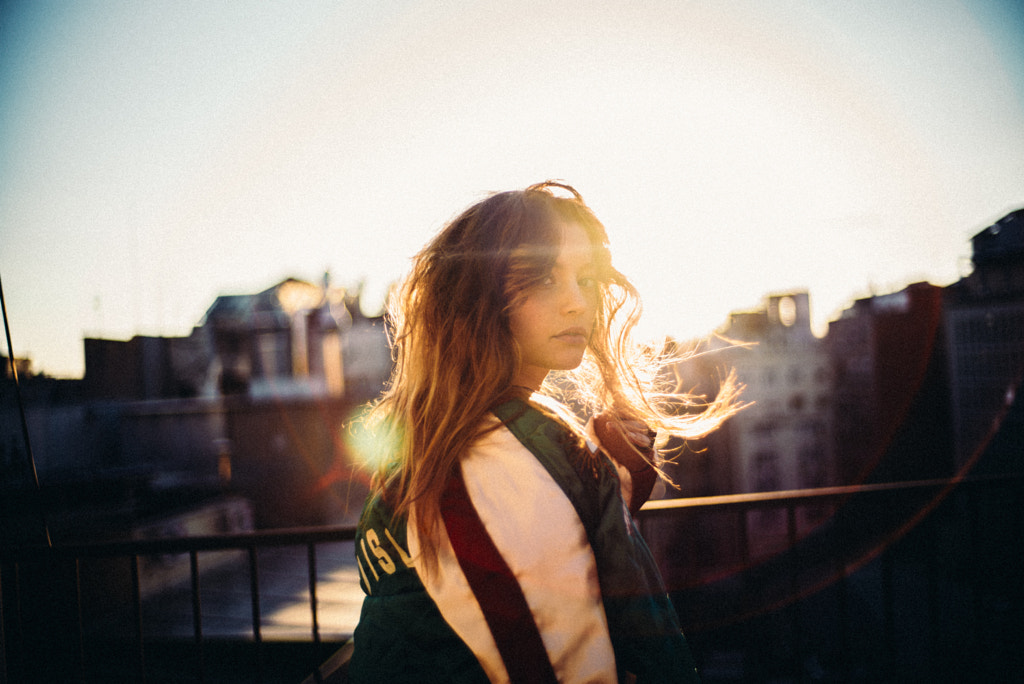
Photography websites are diverse; some are purely portfolios, meant to show potential clients your work, whereas others offer online stores, client viewing areas, and more. The website builder and plan you ultimately choose will depend on the goals you set for yourself. If you want to sell prints, choose one with eCommerce features or print-on-demand services; if you want to start a blog for your clients or colleagues, that’s something else to consider.

Do some digging into other photographers’ websites, and take note of what you like or don’t like. For most websites, it’s easy to tell what builder someone used, and you can always ask if you’re not sure. Your fellow photographers will be a great resource here; reach out and see if they have any tips for building your portfolio.
Over time, you might notice that some web builders have a certain “look” or aesthetic you prefer; some are known for customization, and others are known for beautifully designed templates. Some builders are tailored specifically to photographers, and others are more generic. By researching other photographers’ websites, you’ll also get a better feel for current trends and what looks modern versus what feels outdated.
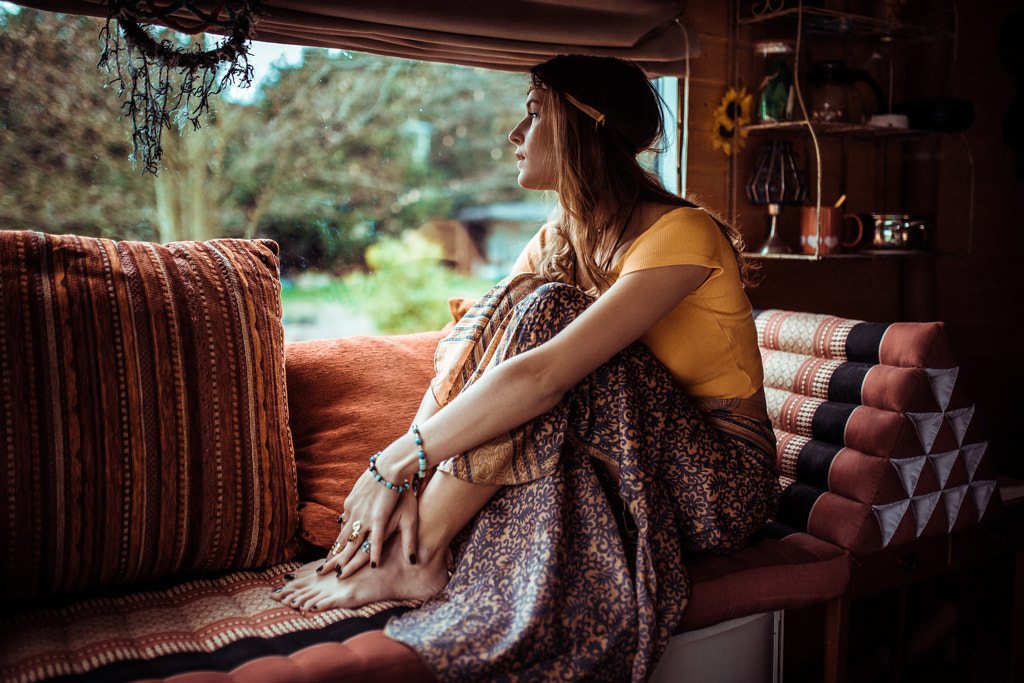
Not every photo will make it onto your website, and that’s okay. Spend some time narrowing down your selects for every series or gallery you plan to showcase in your portfolio, and ask colleagues and peers for feedback on your strongest images. You can also use social media and the 500px community to determine which images are your best.
Every gallery or series should have a range and tell a story in no more than 10-20 images, so cut out any shots that are too similar or repetitive. Play around with the sequence to see what works. It can help to use physical prints and move them around on a flat surface.
Pay special attention to your first and last frame, as these will leave a lasting impression. Attending portfolio reviews can be particularly valuable during this part of the process. You can also take several passes here; after your initial edit, get some distance and reevaluate.
Finally, only share the kind of work you hope to get in the future. Clients will judge you based on what you’ve already shot, so promote projects that align with your goals for the future.
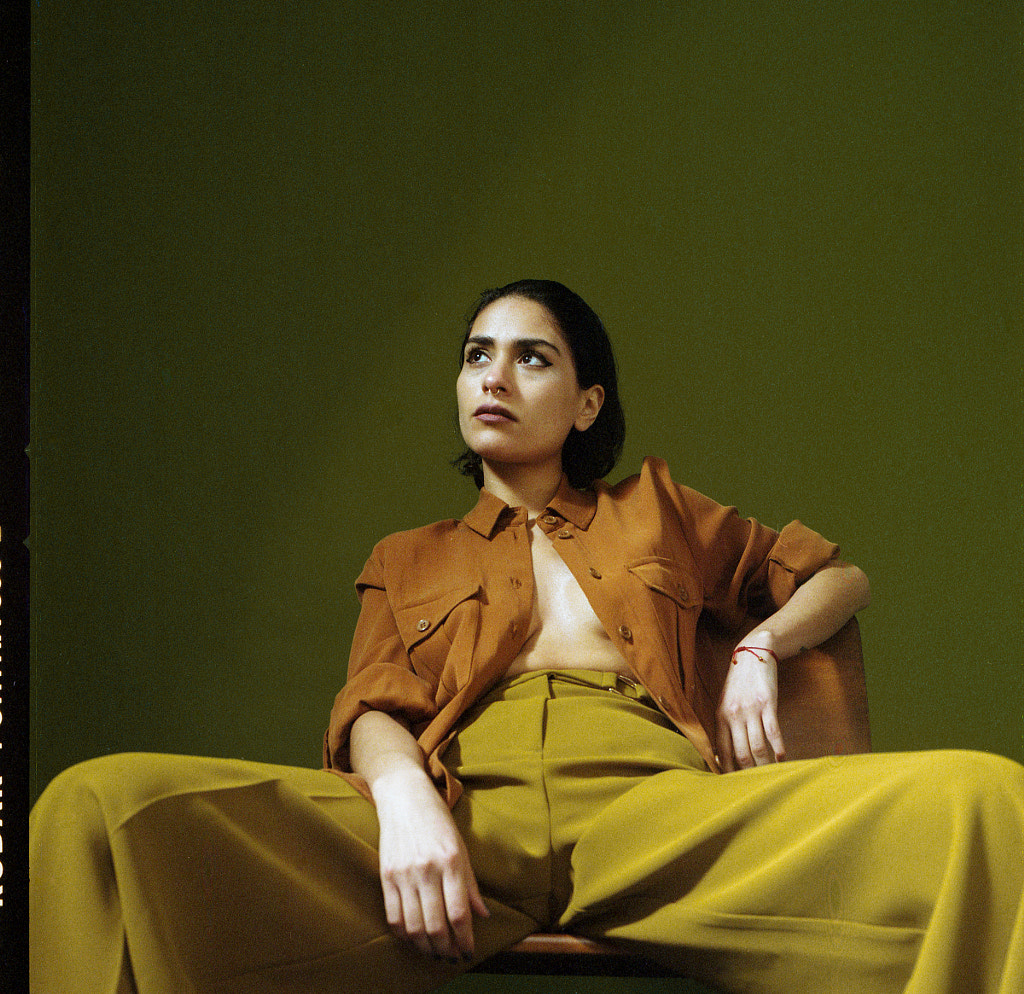
Variety is important, but so is cohesion. It can be tempting to try to fit it all into your website: your portrait work, your landscapes, your product photography, etc. Sometimes that might work, but most times, it’s best to focus on just a few niches or subjects where you truly shine. Your portfolio should be consistent and let potential clients know who you are, what your style is, and where your interests lie, even if you’re flexible and open to shooting different types of assignments.
Your template or web design will also be part of your branding and should support your work; while a slideshow with captions might work best for a documentary photo essay, full-screen images might help show off single images. A portfolio belonging to a wedding photographer will look different than one for a fine art landscape photographer or an advertising photographer. The content of your website should dictate its form, so put some thought into choosing a template that suits your vision and your niche.
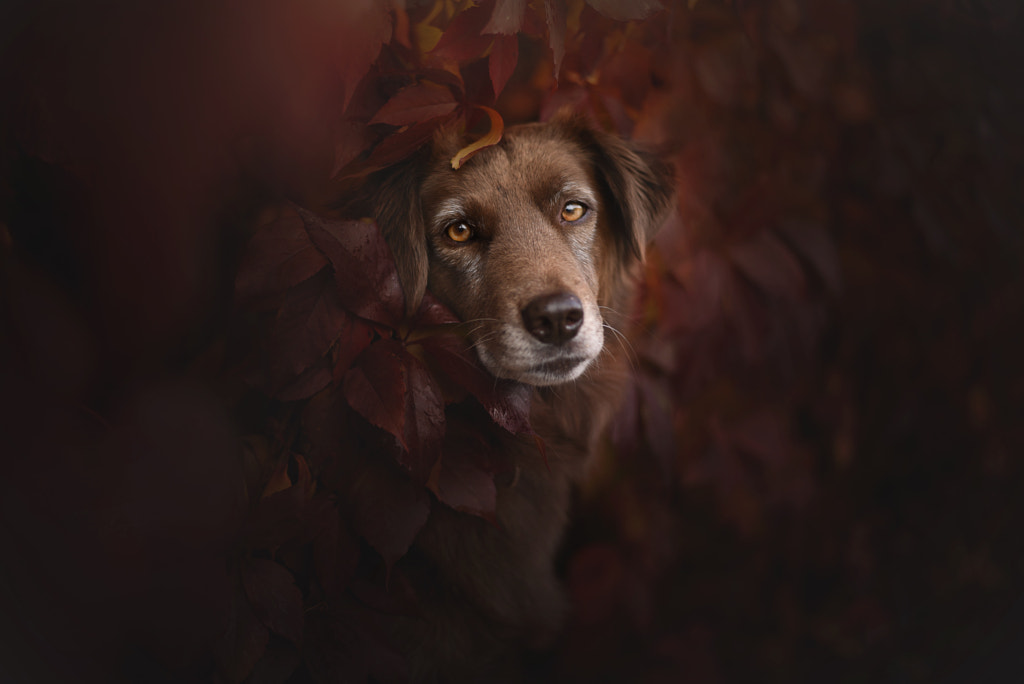
A portfolio website should be clean, easy to navigate, and image-centric. Make sure your contact information is front-and-center and that your images load quickly; there’s nothing worse than a slow website. A simple website that puts your photos first is always better than a chaotic, cluttered website.
SEO (search engine optimization) is key for your website’s discoverability, and there are a few things you can do to boost your rankings. The first is applying relevant keywords (i.e., New York portrait photographer, Toronto food photographer, etc.) that potential clients are likely to search; another is choosing a clean, simple, easy-to-remember domain name (no hyphens).
Blog posts are also great for SEO; by sharing regular behind-the-scenes articles for your followers, you can naturally integrate relevant keywords that drive more traffic to your site. Finally, update your site regularly—search engines prioritize fresh content.
It can also help to get started with Google Analytics; from there, you can track data from your site and determine who your clients are and how they use your site, helping you to further finesse your portfolio to suit their needs.
For the most part, we’ve discussed website portfolios, but depending on your genre, potential clients might want to see a printed portfolio as well.
Make sure your site is optimized for mobile platforms, including tablets and phones, so you can share your portfolio anywhere and at any time, and keep a printed portfolio on hand for meetings with potential clients. It never hurts to be prepared.

Your portfolio will grow with you, and it might evolve over time. That’s okay; embrace change. As you create new work, continue to update your site; replace old series with fresh projects that excite you. Most importantly, don’t forget to keep shooting and creating; the more work you have to choose from, the stronger your portfolio will be.

Not on 500px yet? Sign up here to explore more impactful photography.
The post How to build the perfect photography portfolio appeared first on 500px.
[NDN/ccn/comedia Links]The dates of the Losail shakedown and the subsequent MotoGP tests have been confirmed. First rumors from today’s Dorna, Irta, FIM and MotoGP team meeting.
They discuss whether they should open the dates for the testers’ shakedown, for the designers, with concessions (Aprilia only, today), and from the rookies to the official driversto somehow make up for the three lost days of testing in Sepang.
Obviously, teams with new drivers (Rossi at Petronas-Yamaha, Quartararo at Monster Yamaha, Pol Espargaró at Repsol, Petrucci at Tech3, Zarco at Pramac-Ducati, etc.) pushed the new plan.
The discussion about extending the test days from three to four or even five ended when Michelin made it clear that there weren’t enough tires for everyone.
To reduce costs, the tires will be shipped to the event by sea in containers three months earlier. Each new shipment would incur additional costs.
Negotiations are currently underway with Michelin. The French now have to calculate whether they will be able to deliver enough tires to Doha to allow the official drivers an extra day or two of shakedown training. An additional fourth day of testing is not yet guaranteed.
MOTOGP
Shakedown test in Losail: 5th-7th March
IRTA MotoGP test in Losail: March 10-12
Moto2 and Moto3
Jerez test: 16.-18. March
Moto2 private tests
Jerez: 24.-25. February
Portimão: 2-3. March
Micheal Ruben Rinaldi is the man of the week after a wonderful weekend in Misano and also the host of our live broadcast (which you can see in full length above). The Ducati Aruba team rider spoke openly about various topics and also interacted with our readers.
It was a long and pleasant conversation that could not be missing from his recent successes …
“Misano was a weekend that almost exceeded expectations. I started on Friday with a desire to collect a lot of points, I had to redeem myself and I was focused – he explained – It was great, I still have to realize what happened: to win in front of the crowd that supported me, on an Italian motorcycle and close to home. I think it’s an emotion that you only feel a few times in life, although I hope to have it again “.
Many Ducati fans were delighted to see Bayliss’ number 21 on the top step of the podium again with the works team …
“I was born on December 21st and have been using this number since the days of mini-moto. I found myself on the official Ducati team by chance. It was clear to me to keep it, but everyone started telling me it was Bayliss. So I wrote to Troy to ask if I could use it, he replied that he would like to have his number on a Ducati again. But then he also made it clear to me that I had to accelerate (laughs), he put me under a bit of pressure. “
Thanks to Cecconi, the patron saint of Aruba, you have made it to the factory team …
“I’m a straight guy and a lot of people don’t like me and others, but I’m always myself. Those of a similar character like me appreciate it, even if I should be more political at times. I arrived here and I stayed myself and Stefano immediately believed in me. It’s true that I’m here thanks to Aruba, but if Cecconi did it, it’s because he believed in me and this win is for him too.
But the beginnings weren’t easy …
“My first year in the SBK was very difficult for me and at the end of the season Barni didn’t want to continue with me. That was a key moment, Go Eleven was interested in me from the start, but without the help of Aruba I would not have gotten this package that allowed me to do some good races. Knowing that I was risking ending up without a lift, I knew 2020 was going to be the year of truth, and I decided to take it like I was little, just having fun. I did it and won my first SBK race, this enabled me to join the works team. “
You worked in a factory before to finance your racing sport. Can you tell us this story?
“When I rode in the Superstock 600 for the first time, I was with the gas team that got me out of Moto3 without charging me a cent, also because I didn’t have one. It was a small team with few resources . ” , but they put their heart and soul into it, unfortunately the results did not arrive, also because the means were not the best. So I went to Germano Bertuzzi who sponsored Savadori and told him that I had the potential to win and that if he would help me, I would work for him. At the end of the year he said yes and I started working with him for two years.
Let’s talk about your opponents: Razgatlıoğlu.
“Toprak is a talented driver and the strongest of them all when it comes to braking. We have been fighting each other since 2016 and have pushed ourselves to improve and there is a lot of respect between us “.
Instead, you had a few encounters with Gerloff …
“He’s a guy who has a lot of talent and puts all of his heart and soul into it. he just has to try to be calmer on certain occasions “.
Who was your idol when you were a kid?
“I was born when Valentino came on stage and he was my idol. Now I happen to watch the old SBK races and they had a lot of courage. “
Do you ever think about MotoGP?
“Every rider’s dream is to get into MotoGP one day, anyone who says something else is lying. My career led me to SBK, I am satisfied with my position, I have nothing to do with MotoGP in the contract, but I’m young and if I could take the title home with me, I’d like to go there. If they called me for even a test, I would hurry (laughs) ”.
Many enthusiasts wonder what the difference is between a production motorcycle and an SBK …
“With the Panigale V4S, which was already standard, I was able to drive 1’37” laps in Misano, only removing the mirrors. With a few improvements you can really get 2 seconds out of an SBK. I don’t use it before races because you can’t edit certain details that I can only do at SBK, for example the tank is a bit too big. “
Gigi Dall’Igna, accompanied by Paolo Scalera and Matteo Aglio from GPOne, was the guest of a really nice live streaming broadcast on our usual channels. We were able to talk about 2020 when Ducati won the Constructor’s title in MotoGP. but this also meant the end of the very long relationship with Andrea Dovizioso and Danilo Petrucci. Obviously, Ducati has not stopped working with a view to the future and also the rider selection seems to be aimed at guaranteeing a future shaped by a younger generation, with three rookies poised to make their MotoGP debut on the 2021 Desmosedici to give. This is the first part of the interview with Dall’Igna.
First of all, congratulations on the design engineer title …
“Thank you, it was a great satisfaction. This is my first world title that I won at Ducati and it was particularly satisfying for me.”
It’s a shame you didn’t win the Riders’s too. How much do you think the new Michelin has influenced your performance?
“The new Michelin was an important change and the fact that it wasn’t tested enough and the right set-up found affected the course of the championship.”
But is it true that you are pushing for a new Michelin front tire as soon as possible?
“That’s not true, we didn’t ask Michelin for anything. The rear tire has brought more rear grip this season, which in itself is an advantage. But there are bikes that can benefit more from it than others. ” In certain situations we were no longer able to take advantage of the advantage we had before by sliding backwards when braking. Other bikes that tended to brake harder from a standing start already had an important improvement. From the point of view of exiting the corner, the advantage was the same for everyone. We lost the advantage when braking that we had before with the bike at an angle. I have to say that in reality Ducati hasn’t had that many ups and downs. We did well everywhere except in Aragon and Valencia 1, where we found special conditions. The cold really punished us on these routes. We have to intervene for 2021 so that the drivers can find confidence in the cold and with little grip. “
Now everything changes in the garage, with two young drivers. Are you satisfied with the choices you made when hiring Miller and Bagnaia?
“To be honest, I am happy with the two drivers we have selected for 2021. Jack had an impressive finish with two incredible races. He could have won in Valencia, in Portimao it was directly second place behind Oliveira. Jack made two zeros this year that weren’t his fault, it was Ducatis. Once he broke an engine, another time the motorcycle sucked a crack out of the airbox. At Le Mans he could have won or finished second, at Misano I don’t know where he could have ended up, but the two zeros were certainly not his fault. Pecco made a wonderful early and central part of the season. He was great in Misano 1 and in Misano 2 when he was in the lead he made all the difference. That slide over there … let’s say it was a mistake. I think that we can achieve great satisfaction together with the two of them in 2021. “

They will also debut three rookies. Whatever happens, one of your drivers will win the Rookie of the Year title …
“I think we had reached the end of a cycle and had to start over with something fresher. We have monopolized a generation of talent. That’s right, we wanted to invest a lot in young riders, and we were helped by the satellite teams, which in recent years have contributed to the growth and development of the talents of riders who later became official Ducati riders. It was possible to bring them to the factory team and now I hope to be satisfied with them. “
But as an engineer, are you looking for something in data or telemetry to identify a talent?
“It was easier when I was responsible for the 125 and 250 in Aprilia because I had the telemetry on hand and saw the drivers in the first person in the pits. Now it’s more complicated, I obviously don’t have the telemetry of the others. On the other hand, I can get a lot of help from other people who have a talent for discovering promising drivers, they have a talent for identifying talent, which is a play on words. I’m referring to Tardozzi and Ciabatti who play an important role in defining the teams we will compete with. Choosing a driver is the most complicated phase in running a team. Never sure what to choose until you bring it home, it is one of the most complicated and difficult surgeries. “
But can you tell us now how it really went with Dovizioso, what happened?
“There is nothing secret. During an important season for us and Andrea it was sensible not to find a way to cause controversy between us, the situation was already complicated with no other problems. In the meantime, it has to be said that I don’t think I’ve ever had a long history with a driver like Andrea. Anything can be said, but we’ve been together for a long time and we’ve all done wonderful things together. Then, as always, it’s difficult to continue a story that hasn’t achieved the goal we all wanted as Ducati fans, namely to win the drivers’ championship. “

Did things gradually get worse?
“Gradually the relationships have deteriorated, I think the real decision was made in a meeting here in my office in mid-2019 and in the end I was convinced that neither of us wanted to continue the contract. Everything can change, but at this meeting it was clear that it would be difficult for us to continue the duo Dovizioso Ducati. A lot has happened and we have found another team for the future. ”
Did things gradually get worse?
“Little by little the relationship worsened, I think the real decision was made in a meeting here in my office in mid-2019 and in the end I was convinced that neither of us wanted to continue the contract. Everything can change, but at that meeting it was clear that it would be difficult for us to find a way for the Dovizioso-Ducati duo to keep going. A lot has happened and we have a different team for the future. “
You have worked with many drivers and champions, even with complicated ones. How did it go with Max Biaggi? Is it true that he immediately noticed that you had moved the engine of the Aprilia RSV4 a few millimeters?
“Max is one of the most sensitive drivers I have ever worked with. This engine thing may be true, but I don’t remember it now. He is certainly one of the most important talents in this sport. Although he has won many, I am convinced that that he has gained little compared to his talent. Let’s say working with Max was certainly a good school. “
To talk about the future again, but are you preparing any technological “bombs” for the Sepang tests? You have gotten used to something like that …
For Sepang we have less folk ideas … let’s call them that! They are things that we have thought about for a while and that we doThe aim is to limit the problems in conditions like those of Aragon, where we have suffered too much, the idea is to find a solution to these situations and to ensure that the driver can find confidence in getting the tires up to temperature and pushing hard, even in the cold. “
Dovizioso praised the simplicity of the Suzuki this season. What do you think about it?
“Simplicity is an added value because it means you can make fewer mistakes and find the best possible compromise early on. On the other hand, there are things that you can’t just do. For that you have to work as much as possible to make things simple, but when you need the creative flicker you need something else that complicates things in some way “.
Which path would you recommend to engineers looking to join Ducati?
“Joining Ducati is easy and difficult at the same time. You have to have an important story from an academic outcome perspective, I’m speaking as an engineer. You also need the right opportunity to be able to submit your résumé in the right place at the right time and even a little luck helps. There are a lot of people who also present their curriculum to me during the races, outside the garage or something ”.
But in addition to the design of the MotoGP and SBK bikes, do you also have a bike in the garage? Which is your favorite Ducati?
“Actually, I’ll disappoint a lot of people, but I’m a tourist on a motorcycle. I like to drive many kilometers, I’m a quiet guy on a motorcycle. I only crashed once.” and i was far. The Multistrada is the bike that I like best. It’s closer to what I like to do on a motorcycle. I’ve always enjoyed traveling with my wife and it would be difficult to get her on a Panigale V4! “.
There is a ranking that no pilot would ever want to excel in: the number of falls per year. They say that motorcyclists fall into two categories: those who have already fallen and those who have not yet fallen. A first-hand encounter with the asphalt is practically always possible for a driver, because racing means pushing your bike to the limit and thus also the possibility of making mistakes.
In 2019, counting all classes, 971 falls were registered. The MotoGP riders, the more experienced, are the ones who have crashed less: 220 times. Interesting fact as it represents a turnaround from the last two years when there were more than 300 falls at 18 GPs versus the current 19. The Moto2 riders also made fewer mistakes: 347 instead of 418 in the previous year. Not to mention Moto3, where it hit the remarkable number of 404 falls, fifty more than in 2018, but still far from the 2018 record of 463.
If you look at the corners where gravity does its more work, races definitely winbecause it is the moment when the riders have to give everything (74 falls were recorded in MotoGP, 111 in Moto2 and 166 in Moto3). On the other hand, not many mistakes happen in qualifying, maybe because they focus more on the flying lap. Instead, the riders in FP2 in MotoGP and in Moto3 and in FP3 in Moto2 get used to the asphalt a lot.

Now for the more insidious circuits. Le Mans deserved the palm with a total of 90 falls during the race weekend. In 2009, 2012 and 2013, the French track achieved this unenviable record, also due to the not always optimal weather conditions. Barcelona and Phillip Island were tied on the podium this year and drove under critical conditions.
At the other end of the ranking is Aragon, which, with just 15 falls in 3 days, has hit the minimum number of falls since 2009, the year these statistics were published.
The worst corner is at Le Mans and it’s 3rd where 32 panels scratch the asphalt.

At the end of an almost unsatisfied season, MotoGP top scorer Johann Zarco had 17 (not so happy) falls. The Frenchman was at the head of the Pramac “crash team”, which brought Miller 2nd with 15 falls and Bagnaia 3rd with 14. Marquez was the same number, but we have dedicated a separate article to it (read HERE).
At the foot of the podium stood Abraham, Crutchlow and Mir (another newcomer like Pecco) with 12 falls. The rider with fewer falls (and it’s no surprise) was Dovizioso who only drove 4 times on the asphalt, while 2 more were chalked up by Vinales and Quartararo, proves that he is not only fast.
Instead, Valentino Rossi landed 8 times. Not many overall, as many as in 2018, but still high compared to his standards (in 2014, for example, he only fell twice in the entire season).

But the MotoGP riders are not up to the lower classes. Tom Booth-Amos is the overall winner with 22 falls, more than one per Grand Prix. The Welshman beat Can Oncu, a 21-year-old Turk. Third place in this ranking was taken by an old friend: Sam Lowes, to whom the spare parts dealers should erect a memorial.
Two of the Italians stood out (if you want to call them that): Marco Bezzecchi (5th with 18 falls) and Vietti (6th with 17). Both were newbies to their respective categories and paid the price for it … with their suits.

