
[NDN/ccn/comedia Links]
Andrea Dovizioso (WithU Yamaha RNF MotoGP Team) is, meanwhile, one of the three most experienced riders on the grid at Termas – but all his races, including podiums, were with Ducati. Now he faces a new challenge of taking on the track on the YZR-M1, and after a technical issue stopped him early in Indonesia, he’ll want to get back in the points as a minimum. On the other side of the garage the vibe was the opposite in Lombok, however, as Darryn Binder steamed up inside the top 10 and was as high as eighth before a fair but aggressive move from his brother, no less, saw the younger South African classified 10th. That’s put him top in the battle for top rookie so far in 2022 though, and it was truly a stunner that will have lifted his confidence even if Argentina proves dry – at a track where he already has a Moto3 podium.
MotoGP has been missing from Argentina for three years, since the Covid pandemic made it impossible to go to the Termas de Rio Hondo track. Despite the absence of races, the circuit has experienced some ups and downs, such as a fire that broke out last February that damaged much of the main building, the one that houses the press room, the Race Control offices and the VIP area.
There has been time to put everything back in order, but the biggest question remains in what conditions the riders will find the track. The Termas circuit is not used very much during the year and the pandemic has further reduced the activities on the track, with the consequence that the riders will most likely find dirty asphalt with little rubber. If we want to look at things a bit philosophically, after the Lombok GP in this sense the riders are already used to finding themselves in difficult conditions.
To understand more, we will have to wait for the first practice session on Friday, but a look at the past says something about what to expect from the Argentine trip. first of all, of the 6 editions of the GP, Honda has won 4 and Yamaha 2, while Marc Marquez is the rider with the most successes to his name, three to be exact. The Spaniard, however, runs the risk of not racing this weekend after the worsening of the problem of double vision in the right eye. Today he will undergo a new medical check, after which we will know what the plans of the 8 times world champion are.
For sure since 2019 a lot of water has passed under the bridge, the bikes have changed and so have the riders, with some who have never even had an opportunity to race at Termas in MotoGP, such as Bastianini and Brad Binder, who will arrive in Argentina first and second respectively in the standings.
Another interesting fact is that Ducati has never had very good results in South America. Leaving aside the disaster of 2016 (Iannone crashed taking Dovizioso out while they were fighting for 2nd place), the Desmosedici has reached the podium in the Argentine GP only twice: in 2015 (Dovizioso was 2nd) and in 2019 (Dovizioso 3rd), in both cases with a fairly high gap from the winner.
Writing the Ducatis off would be premature, however, because last year the Rossa proved to be able to have its say on tracks where it had struggled in the past (such as Jerez) and, if there is a perfect moment to break the curse of Argentina, it is this one.
Bagnaia, in fact, finds himself with only one point in the standings after two races and must (the imperative is a must) begin his comeback, especially against Quartararo. The Frenchman is 26 points away and in theory he could have his say at Termas, because Yamaha has not only won two races in Argentina (with Rossi and Vinales) but has always placed at least one M1 on the podium.
However, things could go differently if you believe what Fabio said in Indonesia: “The race in Argentina will be the most difficult one of the year for me. We know we have made some choices on the bike that will make the first part of the season complicated, but I will give my all and I think we can do well”.
So the form factor could change, without forgetting KTM, which has been the surprise of this early part of 2022 (you can read our interview with the team manager Francesco Guidotti HERE), and Suzuki which aims to return to the levels of the winter tests .
There is a lot of uncertainty on the eve of the race, but when it comes to MotoGP we are now used to it…
If Aprilia have a race winning package in 2022, then expect Aleix Espargaro to lead the team’s charge after Maverick Vinales stayed a long way off his team-mate during the Qatar MotoGP.
Vinales, who has won at least one race in each of the last six MotoGP seasons, a stat that’s currently best among all current riders, finds himself still adapting to Aprilia’s new 2022 RS-GP machine.
Moving on from Yamaha after five-and-a-half seasons with the Japanese manufacturer – before that he spent two years with Suzuki (also an inline-four engine) – the switch from an inline-four to a V4, which is the first time he’s done so in the premier class, along with the difference in how the bike generates its peak performance has seen Vinales make a slow start to his time at Aprilia.
And sadly for the Spaniard, Qatar was much of the same following two pre-season tests where the nine-time MotoGP race winner looked very strong, something he’s been known to do.
Speaking after his P12 finish, Vinales concluded: “This is obviously a disappointing result. This is certainly not in line with my expectations or the team’s, but I never had the right feeling with the front end and going into corners.
“We’ve got a lot of work to do. We need to get to know this bike better. We had some feelings in the tests that we evidently need to find again.
“I didn’t make any mistakes in the race and I didn’t have any significant drop in tire performance, but I didn’t manage to have a good pace either.
“This is not what we want or what we know we are able to achieve.”
Having spent the final five rounds of 2021 with Aprilia, expectation was that Vinales could challenge for significant points, especially given his record in Lusail – has two wins which is tied with Andrea Dovizioso as the most among current riders.
However, that turned out not to be the case as he was instead 21 seconds off team-mate Espargaro who claimed P4.
THIS year, the Daytona 200 turns 80-years-old. The famous Floridian oval has already played host to some magnificent racing moments this year, such as the 80th running of the Daytona 24 Hour endurance race; Austin Cindric winning the Daytona 500 as a rookie; and just last weekend Eli Tomac distinguishing himself as the rider with the most Daytona Supercross wins in history, with six total.
Now it is the turn of the 200, which has garnered renewed attention in recent years, along with other prestigious, historical motorcycle races such the Suzuka 8 Hour, Bol d’Or (since its return to Le Castellet from Magny-Cours) and 24 Heures Motos at Le Mans. For Daytona, the renewed attention is a result of the race being taken under the MotoAmerica umbrella for the first time since the same organization took control of the AMA National Road Racing Championship in 2015.
Last year, Yamaha celebrated a milestone of its own, its 60th anniversary, with special nostalgic paint schemes for its factory MotoGP test riders – Cal Crutchlow, Katsuta Nakasuga and Kohta Nozane – in MotoGP preseason testing; its factory Pata Yamaha, and satellite GRT Yamaha, WorldSBK teams; the factory Yamaha Austria Racing Team in the Endurance World Championship; and for the McAMS Yamaha BSB squad.
Admittedly, for YART, who ran the famous red and white ‘Speed Block’ livery at the Bol d’Or, it did not work out so well as they were forced to retire early from the race thanks to an engine blow-up. Also, for Yamaha’s WorldSBK star and title contender, Toprak Razgatlioglu, the special paint proved superstitiously problematic, with an electronics issue forcing him to retire from the first race of the Barcelona round of the Superbike World Championship while leading.
Now, Yamaha are celebrating their return to the Daytona 200 this weekend with a return of that 60th anniversary livery for the Attack Performance Fresh N Lean Progressive Yamaha Racing team, and their riders: reigning MotoAmerica Superbike champion Jake Gagne, and Cameron Petersen.
Yamaha won their first Daytona 200 with Don Emde, son of 1948 Daytona 200 winner Floyd Emde in 1972, with a TR3 road racer.
In a Yamaha press release, Don Emde said, “March 12, 1972, holds a true lifetime memory for my entire family and myself, as working together, we took that little TR3 Yamaha giant-killer to victory.” He added, “I took the checked flag about five or six bike lengths ahead of the second-place rider, and the feeling of that victory 50 years ago remains fresh to this very day!”
In the 50 years since that win by Emde, Yamaha have gone on to collect more Daytona 200 wins than any other manufacturer (the ‘most winningest’ factory, to use an Americanism), including 13 in succession between 1972 and 1984. With 27 wins In total, Yamaha have won more than half of the Daytona 200s run since their first victory.
In April of 2021, the photographer Jesse Frohman auctioned an NFT representing his last formal session with Kurt Cobain before his passing. In August, previously unseen footage from Randall Slavin’s final photoshoot with Chris Cornell was released in the form of NFTs. In January of this year, the Associated Press launched an NFT marketplace for their award-winning photojournalism.
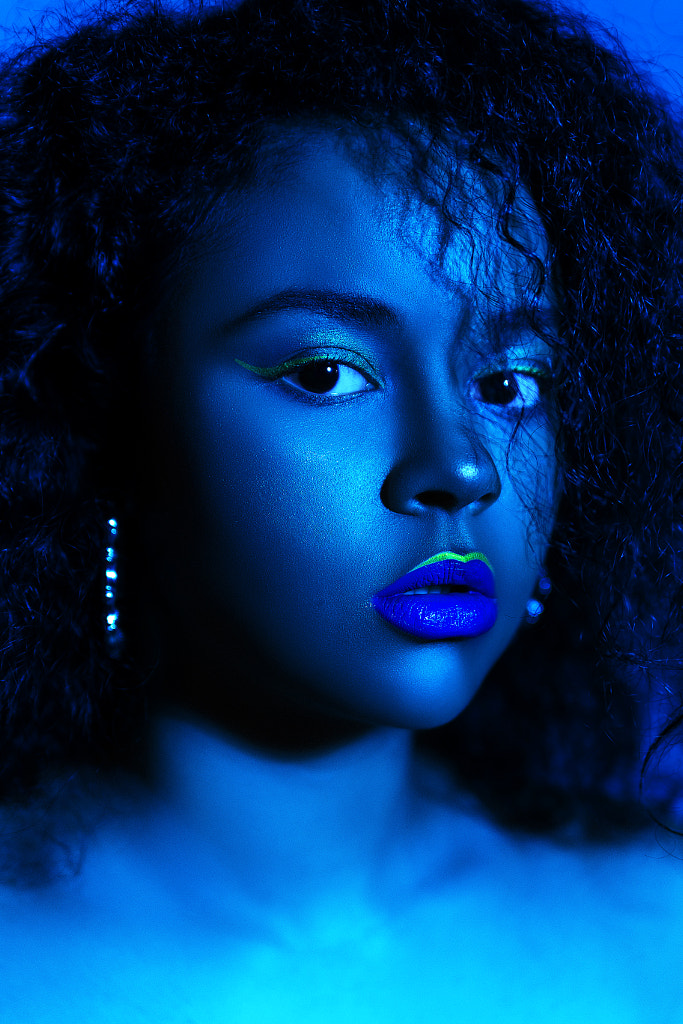
In the last year, we’ve seen photographers use NFTs to tell untold stories, push the limits of creative expression, and honor moments and icons of historical significance. Photographers with household names, like Platon or Marco Glaviano, have gotten involved, as have newcomers just now building a name for themselves in the industry. If 2021 was the year NFTs hit the mainstream, we predict 2022 will be a year of further exploration—particularly in regards to photography.
A quick refresher on terminology: Non-fungible tokens, or NFTs, are unique digital assets linked to a blockchain, which acts as an immutable public ledger. In the art world, we can think of them as certificates of authenticity for digital files, such as photos, 3D images, videos, and more. While most jpegs can still be copied endlessly, blockchain technology allows us to assign verifiable ownership to works of digital art. It’s a novel idea that’s shifted our perception of what’s possible in the art market, while drawing the attention of countless collectors.

“Making enough from my art to not have to worry about my finances too much has probably been the most rewarding outcome of selling NFTs,” Zach Doehler tells us. The 21-year-old landscape photographer, known for his signature use of color and light, is a prominent figure on digital marketplaces like Foundation and SuperRare.
Zach’s advice for getting started? Manage your expectations, and avoid comparisons with other photographers. “Making sure to not set your expectations too high can prevent you from burning out,” he advises. Some photographers make it big overnight, but for most, it’s a marathon rather than a sprint. Give yourself time to build a following and engage with the community.
One standout benefit of NFTs is that they run on smart contracts that can award royalties to the original creator of an artwork when it’s sold on the secondary market. That is, if a collector resells your photograph to someone else, you can automatically receive a percentage of that sale, in perpetuity. This is something artists have been pushing for for generations now, and the blockchain means it could finally be a reality.
Importantly, selling an NFT does not mean signing away your copyright, so you’re still free to monetize your work in other ways, such as editioned prints. You’ll often see photographers working across virtual and physical media.

When Jesse Frohman auctioned The Last Session NFT project featuring Kurt Cobain, it marked the first time the photographer had sold directly to collectors, without the need for a third party. One of the most appealing aspects of the crypto art space is the idea that it operates without traditional “gatekeepers,” such as gallerists, curators, or dealers. Instead, photographers can connect directly with collectors, share their stories, and spread the word about their work.
Staying active and present online is important here, so follow collectors you admire on Twitter, and join Discord servers to stay up-to-date on what’s happening in the market. Interacting with the Ethereum blockchain requires gas fees, so it’s not free to mint an NFT. With that being said, the virtual art space is more accessible in many ways than the traditional art world, where access to studio and gallery space is often a prerequisite.
When collectors invest in NFTs, they aren’t necessarily paying to hang a work of art on a wall (though we’ve seen ingenious uses of display screens and virtual galleries); they’re investing because they believe in the artist and want to be part of their journey. Early collectors in the space regularly chatted with the artists they supported, learning more about their stories, histories, and motivations. Many crypto collectors still do. “What we’re seeing is that buyers are often more interested in investing in the artists and their careers, as opposed to the actual work alone,” the 500px team explains.

“The NFT community, in particular, has been wonderful,” the photographer Zach Doehler continues. “Artists, big and small, engage and communicate with each other on a level playing field.” The NFT space is still new, and this sense of possibility and excitement has resulted in an atmosphere that fosters collaboration and support between artists, across genres, media, locations, and backgrounds. No geographical restrictions apply.
On Twitter, you’ll often see established artists promoting and investing in emerging artists. Aaron Ricketts, for instance, started building his own art collection after getting started with and selling NFTs (his first piece sold for 2.88 ETH).

If we take this idea of community a step further, we can begin to imagine the kinds of collaborations and group projects that are possible in this space. Though not limited to photographers, we can find inspiration in the 100-artist collaboration, conceptualized by the NFT curator Loopify, which featured big names and newcomers alike. Or we can turn our attention to exquisite.land, a collaborative project where collectors receive a tile that they can draw on to contribute to one massive piece of art.
For photographers, this could mean many things, from collaborating with an illustrator to create a collage to having someone animate your still pictures to turn them into moving images. Tap into the community; follow artists you love, and don’t be afraid to break the mold.

The beauty of NFTs lies in their ability to create scarcity in a digital world; while photographs can be copied and stolen easily in this day and age, NFTs provide verifiable ownership of the “real thing.” In other words, photographers can decide how rare or common their works can be; they can create a 1:1 work for a one-of-a-kind NFT, or they can release a photograph as a multi-edition collectible.
500px is the home of Vault, an NFT marketplace by and for creatives. The 500px team elaborates, “With prints, it’s easy to make a copy or imagine that there will be more editions of a photograph; however, NFTs are founded on the idea of exclusivity—and that’s something that attracts collectors.” During the pandemic and related lockdowns, the world of cryptocurrency and NFTs allowed photographers to expand into the metaverse, earn money, and build connections across thousands of miles, from their own homes and studios.
NFTs also offer unheard-of options in terms of value and real-world utility. For our purposes, “utility” just describes the benefits awarded to an NFT holder; for photographers, it might be a physical print to go along with the NFT, an invitation to an exhibition, or even a portrait session with the artist. As photographers dream up innovative ways of creating interest and value, we’ll see more and more creative ideas that further strengthen the relationship between artist and collector.
Join the VAULT waitlist to get early access and be the first to find out how you can create, buy, sell, and earn.
Check out these articles to get to know more about NFTs:
What You Need to Know About NFTs as a Photographer
The 500px guide to understanding NFT and crypto buzzwords
How NFTs Protect Artists
What to Consider When Buying NFTs
How to Price your Artwork
How to Safeguard your Artwork or Art Collections
The post Four reasons why NFTs are a great fit for photographers appeared first on 500px.
[NDN/ccn/comedia Links]
